Becoming a Principle-Driven Leader
How managing through principles (rather than strict rules) can help organizations, societies, and individuals thrive.
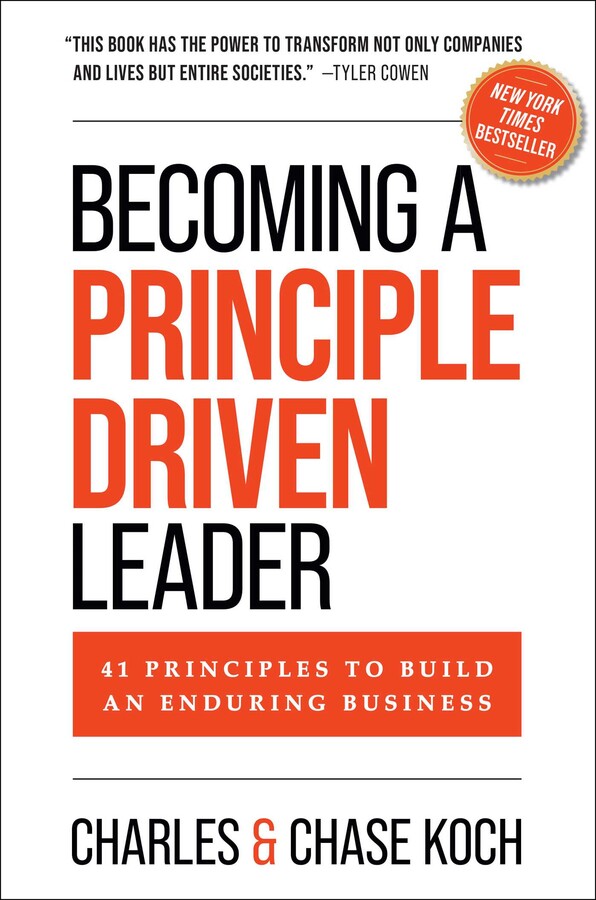
Becoming a Principle-Driven Leader: 41 Principles to Build an Enduring Business
By Charles Koch and Chase Koch
Story Brand Books, 2026
Charles Koch is on a mission to foster more principled behavior in the world. He’s written several books on principle-based management, and co-authored this one — the first I’ve read — with his son Chase. The goal: help businesses, societies, and individuals thrive by adopting a principle-based mindset.
The key distinction is between management through principles and top-down management by rules. The latter is impracticable because managers aren’t omniscient. Arbitrary constraints proliferate in such a system, leading to stasis and entropy.
How do you keep things moving in the right direction without proliferating rules? By infusing the organization with principles. The book showcases 41 that made the Kochs successful, including Integrity, Openness, Property Rights, Mutual Benefit, Personal Knowledge, Stewardship and Compliance, and more.
Some of these are more obvious than others. Sidebars throughout the book highlight each principle as the authors narrate stories from their careers that exemplify how their organizations infused a principled culture, stayed ahead of change, out-competed other organizations, influenced policy, contributed to the broader well-being, and more.
The book starts by suggesting it’ll unfold from the perspective of both Charles and Chase, who also works at Koch Industries. But apart from a couple of autobiographical chapters at the beginning, most of the book told from a unified POV. (It’s clear Chase has internalized his father’s worldview.)
The two autobiographical chapters comprise the first part of the book, which is about applying principles to transform your life. The second part is about transforming your business. The final part is about transforming society. It applies the Koch’s principles to thorny social and political issues.
Business books often gloss over mistakes to elevate the authors. This one doesn’t. The Kohns own up to numerous mistakes, including one that cost the lives of two teenagers. Rather, they often own up to their companies’ managers’ mistakes, something I found a bit off-putting. Still, the message is clear: principled decision-making helped them get ahead — and they got in trouble when eschewing such principles.
The world would be better if principled people were in charge. I happen to agree with most of the principles in this book, but IMO the broader point is driving change through clear and well-grounded principles rather than top-down rules that constrain human agency. In promoting this mindset, this book provides a blueprint for building a more harmonious, adaptive, productive, and fair world.